
Sareena Dubey
As the days become shorter and trees shed their leaves, I find warmth in wool and comfort in familiar melodies. During this shift, my voracious exploration of obscure musical genres diminishes as a stronger desire to reconnect with nostalgic tunes takes over. This phenomenon culminates in a seasonal tradition I deem the changing of the playlists where songs from my past hold my headphones hostage until the winter solstice. In this piece, I will explore the backstories behind a handful of these songs that have survived the cold in my Fall to Winter playlist.
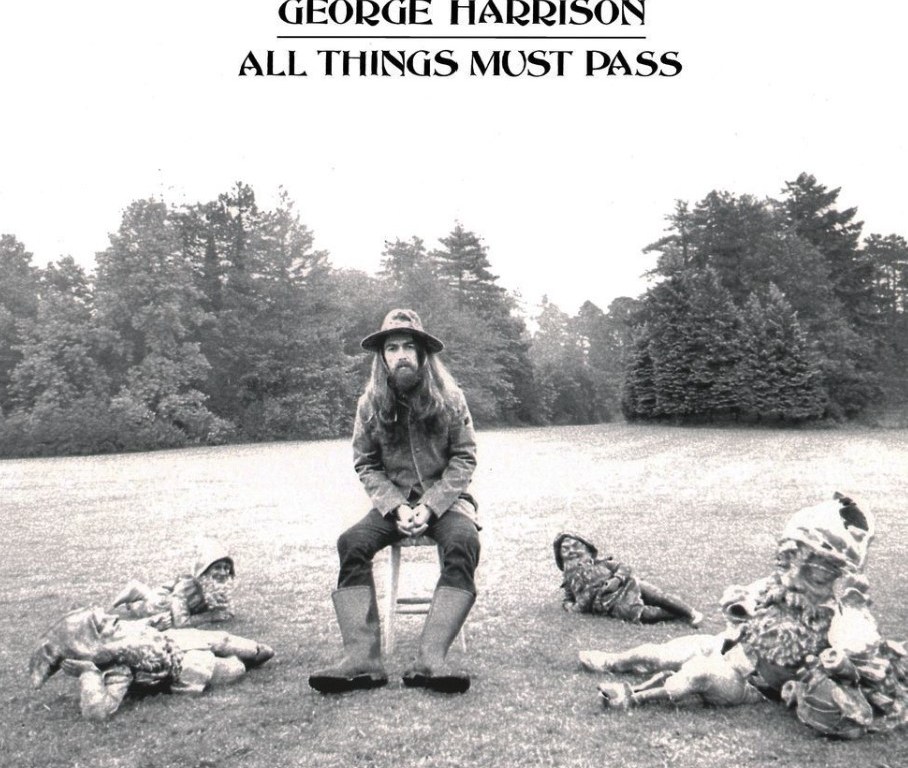
The song that kicked off the changing of the playlists this year was none other than “My Sweet Lord” by George Harrison. This hymn-like record belongs in my temple of great tunes on account of its thoughtful lyrics and transcendent sound, featuring Harrison’s well-recognized slide guitar motif. The hit song came from Harrison’s 1970 release of All Things Must Pass, which was his first foray into solo work after The Beatles split. “My Sweet Lord” was a huge commercial success and became the biggest-selling single of 1971 in the United Kingdom. Harrison crafted “My Sweet Lord” around the idea of blending the Hebrew term “hallelujah” with “Hare Krishna.” In his autobiography, Harrison comments that he did this to demonstrate that the two chants, respectively from the West and the East, meant “quite the same thing.” Harrison initially gave the song to Billy Preston, who recorded it for his album Encouraging Words. The song in Preston’s treatment only garnered minor attention before Harrison released his recording. Despite the success of Harrison’s version, the song launched a publicized lawsuit due to its alleged likeness to the 1963 Ronnie Mack hit sung by the Chiffons, “He’s So Fine.” The verdict found Harrison guilty of subconsciously plagiarizing the song. Controversies aside, this song remains a quintessential addition to my Fall to Winter playlist. Another one of my favorites of All Things Must Pass is “I’d Have You Anytime.”
The bluesy rock song “Gloomy Reflections” from Shinki Chen’s 1971 self-titled album also makes my list. Shinki Chen, dubbed “Nippon’s Jimi Hendrix,” was essential in Japan’s psychedelic rock scene. He is most well known for his involvement as the lead guitarist in a group called Speed, Glue & Shinki. The band was only active for two years and split up shortly after the release of their debut album, Eve. After the group disbanded, the drummer Joey Smith independently released an LP titled Speed, Glue & Shinki, which used guitar recordings from Chen without his consent. Due to this betrayal, Chen stopped recording music and decided to become a solely live musician. Therefore, his recordings are few and far between. “Gloomy Reflections” is one of those incredible recordings. Chen’s fuzzy vocals linger over the sounds of a drowned bass and “weeping” guitar. It’s a great listen for a cold and rainy day. I also recommend listening to “Freedom of A Mad Piper Lantern” and “Corpse” from Shinki’s self-titled album.
The last song I want to introduce on my list is “The Big Country,” the eleventh and final track from Talking Heads’ second album, More Songs about Buildings and Food, released in 1978. I am particularly taken with the song’s subject, which demonstrates David Byrne’s budding interest in Americana—which eventually becomes a salient theme in some of his future work. The lyrics initially convey a certain nostalgia towards the country as the narrator recounts memories of the “shoreline,” “nice weather,” and “farmlands.” However, this is juxtaposed with the narrator’s proclamation, “I wouldn’t live there if you paid me.” Byrne explained in an interview that he wrote “The Big Country” about hating “ordinary things” like “living in a modern condominium and working in an office.” He goes on to explain how he wanted the description of the country in the beginning to “sound almost clinical. Benign and sympathetic, but still kind of clinical.” He does this to contrast the narrator’s repulsion of the country, which is evident further into the track. The song captures a distinctly Middle American sound, even as a mimicked, exaggerated version of Middle America. The song’s sound walks the line of pop and country and is most recognizable for its slide guitar motif played by Jerry Harrison (unrelated to George). An ironic and compelling listen on days I miss my hometown in Ohio. If you have any inclination to go further down the David Byrne Americana rabbit hole, I would suggest looking into his film True Stories.
Thanks for reading, and I hope some of you listen to these gems which I have compiled here: https://youtube.com/playlist list=PLHXA68nX1O0YjdTcAU8ryyRzgbUWb3y5d&feature=shared.
Image: George Harrison, All Things Must Pass, 1970
Sareena Dubey is an M.A. student in the Global, International, and Comparative History program. Her focus is on long-term immigrant settlements in the West originating from South and Southeast Asia. Her research specifically explores the resulting cultural practices, intra-ethnic hierarchies, social movements, and outside interventions on and within these communities. In her free time she enjoys collecting records, and cuddling with her dachshund called Disco.
 The Footnote