
Anna Maggi
In the wake of the 2024 Presidential election, one thing surprised me more than anything else: the immediate conspiracy-mongering of the left. Within hours of Vice President Harris’s concession speech, Democrats were parroting conspiracy theories initially peddled by Donald Trump and his followers after the 2020 election. Across Tiktok and X, posts with over 10 million viewers spread conspiracy theories about the election interference from Trump, many involving Elon Musk and Starlink.
In the age of social media and mass communication, conspiracy theories seem more rampant than ever. Whether it’s your conservative grandfather telling you he thinks the Democrats have a weather machine and are using it to sic hurricanes on red states, or your terminally online cousin claiming that Trump staged his first assassination attempt, Americans seem to have a particular affinity for crafting these tales. This is what the historian Richard Hofstadter referred to as the “paranoid style” in American politics. Published in 1964 in the wake of the Kennedy assassination—and the countless theories surrounding it—Hofstadter outlines “the sense of heated exaggeration, suspiciousness, and conspiratorial fantasy” that marks American politics, a phenomenon made significant through its use by “more or less normal people.”
Belief in conspiracy theories is largely rooted in an overly simplistic view of the world, one in which there are constant existential threats. As Hofstadter describes it, “The paranoid spokesman sees the fate of conspiracy in apocalyptic terms—he traffics in the birth and death of whole worlds, whole political orders, whole systems of human values. . . He constantly lives at a turning point.”
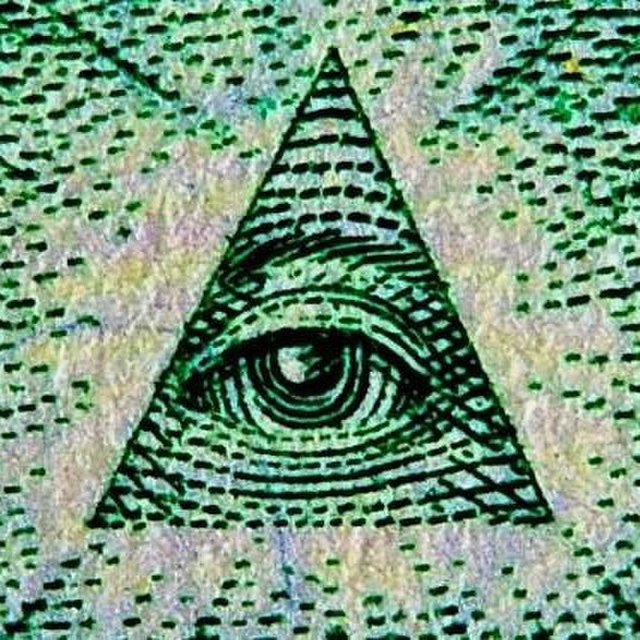
So how did we get here? Conspiracy theories in American history are as old as the country itself. In the late eighteenth and early nineteenth century, Americans feared that their young country would be taken over by the Bavarian Illuminati. The Illuminati, or “Illuminism,” according to Hofstadter, was a short-lived anti-clerical, rationalist movement inspired by the Enlightenment that was founded in 1776 by a Bavarian law professor. Its humanitarian rationalism influenced American Masonic lodges, leading many to falsely equate the two groups. This, coupled with the fact that several Founding Fathers and presidents like George Washington and Andrew Jackson were Freemasons, opened the door early in American history to the idea of a “shadow government” pulling the strings behind the scenes.
Throughout the nineteenth century, conspiracy theorists shifted their blame to the hated minority group du jour. The anti-Masonic movement, for example, was quickly tossed aside in favor of a new anti-Catholic—more specifically anti-Jesuit—movement, followed by anti-Mormon movements and continuing anti-Semitic movements.
The early twentieth century, however, proved to be a turning point for conspiracy theories in the United States. As historian Kathryn Olmsted argues in her book Real Enemies: Conspiracy Theories and American Democracy, World War I to 9/11, the first World War ushered in a new era for conspiracism in which theories shifted from being “concerned that alien forces were plotting to capture the federal government” and instead worried that “the government itself was the conspirator.” The neverending parade of conflict in the United States throughout the twentieth century certainly provided an easy breeding ground for conspiracism. According to Olmsted, “the history of conspiracy theories is often the story of the struggle over the power to control the public’s perception of an event.” Pearl Harbor in 1941, the Kennedy assassination in 1963, and the Watergate scandal and cover-up in the early 1970s are only a few examples of major events where this struggle over a popular narrative occurred.
The key to the persistence of conspiracy theories throughout the twentieth century and into the twenty-first lies in conspiracies themselves. Returning to the Kennedy assassination, for example, it was not inconceivable to the general public for the government to have engaged in some form of conspiracy or cover-up around it because the Kennedy administration had engaged in its own conspiracies. In Operation Mongoose, for example, the Kennedy administration conspired to not only topple the Communist Cuban government, but to have Castro himself assassinated. It is also worth mentioning the CIA’s countless attempts to embarrass or otherwise harm Fidel Castro in increasingly absurd plots that frankly remind me of the dynamic between Wile E. Coyote and the Road Runner from Looney Tunes. These methods ranged from furnishing a Cuban agent with poisoned pens (coincidentally on November 22, 1963) to use against Castro, to giving him poison cigars, to putting thallium salts in his boots that would cause his iconic beard to fall out. Dropping an anvil on Fidel Castro’s head did not seem out of the range of possibility for the CIA.
To put it lightly, anything seemed possible.
As the twentieth century trundled on, the problem only worsened. Following Watergate, the Church Committee attempted to regain the American public’s trust by investigating and revealing past indiscretions by various government agencies, but ultimately had the opposite effect, tanking Americans’ trust in the government. The declassification of more government documents in the late 1990s and early 2000s did the same. Around 9/11, revelations about Operation Northwood, a false flag operation proposed by the Department of Defense in the 1960s that involved staging terrorist attacks like blowing up American ships in Guantanamo Bay in order to justify American military intervention in newly communist Cuba, for example, made it evident to conspiracy theorists that the government was both willing and able to do “anything to achieve its goals.”
In short, the kind of theorizing exemplified in the social media posts that inspired this article is nothing less than another entry in the great American tradition of conspiracy theories. After the chaos of the 2020 Presidential Election and the January 6th Insurrection, it once again seems that anything absurd and terrifying is possible in American politics. As disappointing as the election results might have been, it is more valuable and productive, in my opinion, to work to understand the actual factors that produced this result. Do your own research and remind yourself that nothing in history—let alone an elaborate scheme to overthrow the government—is simple enough to fit into a 15 second video clip.
Image: Wikimedia Commons
Anna Maggi is a first-year MA student in the Global, Comparative, and International Studies program. While majoring in History at the University California, Davis, she developed an interest in women in radical American politics in the 1960s and 1970s, including attempted presidential assassins Squeaky Fromme and Sara Jane Moore. She loves musical theater, The Simpsons, and trying to raise a sourdough starter.
 The Footnote
