
Juliana Lo
On July 24, 1996, the New York Times front page image featured the United States’ women’s gymnastics team receiving the gold medal at their home Olympics in Atlanta. The headline in the sports section stated: “For the Magnificent Seven, It Hurts So Good” underscoring the dramatic finish to the team event. These female athletes, nicknamed the Magnificent Seven, signified the rise and excellence of American gymnastics. The team’s success served as a response to the Eastern bloc’s dominance (like Olga Korbut and Nadia Comaneci), and as a reflection of the domestic growth of the sport. The athletic and popular success of the Magnificent Seven remains prevalent, with several 21st century U.S. Olympic leotards modeled after the 1996 version. As a cultural product of the 1990s, the patriotic leotard reveals the Magnificent Seven’s role in popular culture, as representative of ideal femininity and American strength. This article traces the prominence of the Magnificent Seven, its relation to the larger context of the 1990s, and the persisting relevance of women’s gymnastics in U.S. political culture.

Image 1. USA Women’s Team waves to the crowd at the Georgia Dome in the 1996 Olympic Games in Atlanta, Georgia, (From left to right: Dominique Moceanu, Kerri Strug, Shannon Miller, Jaycie Phelps, Amy Chow, and Dominique Dawes, not shown: Amanda Borden), Doug Pensinger, Allsport.
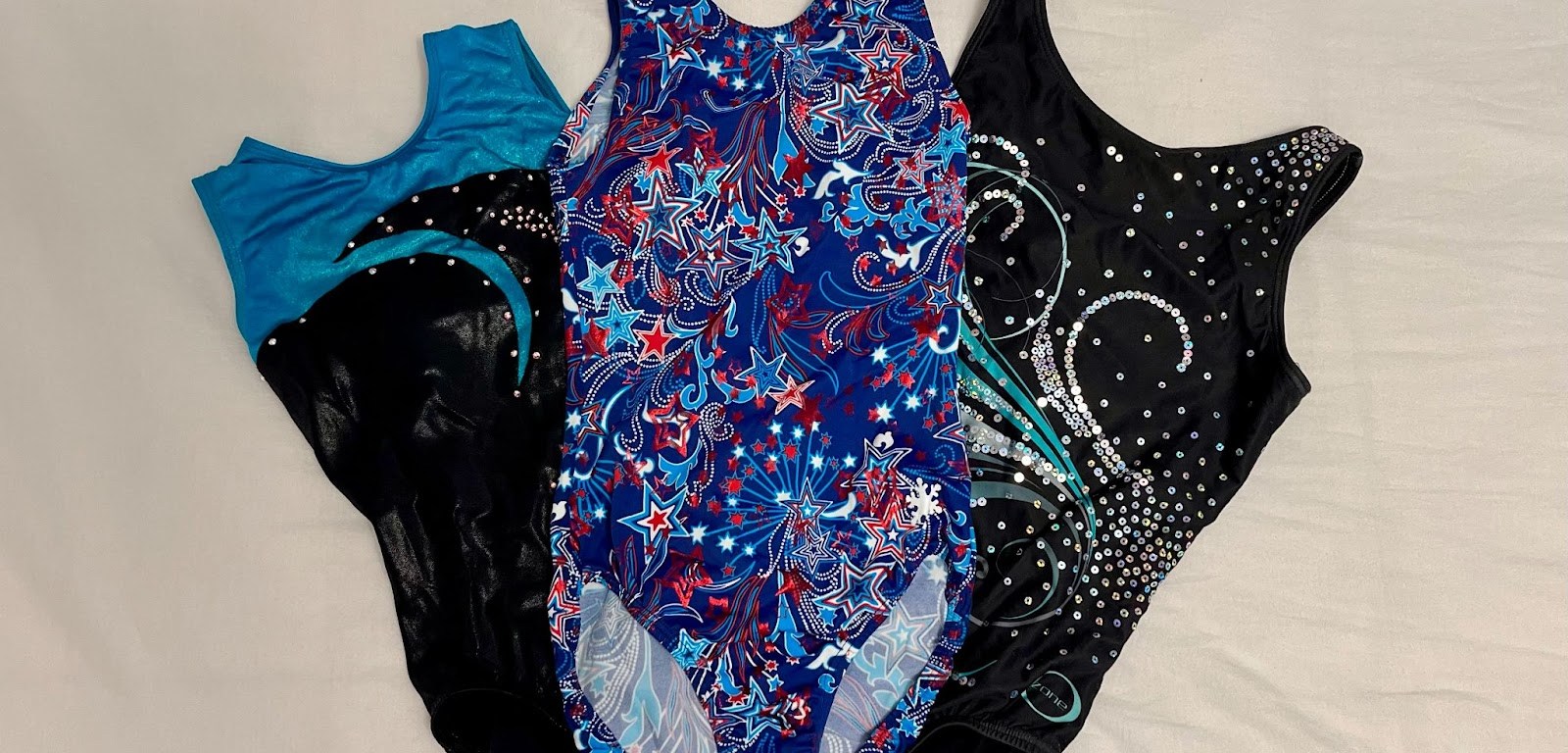
As a legacy of Cold War competition, the Olympics in the 1990s served as an international stage for competition, with prestige for the winning states’ domestic audience and global status. While the all-around competition centers on the individual, the women’s team final takes on added significance as it displays the depth and strength of a nation’s gymnastics program. Visually, the design and colors of each leotard tap into the political and cultural identity of the represented state. While a flag remains limited in its use during the national anthem, parades, or protests, patriotic leotards transform the flag into a dynamic, captivating, and evolving symbol. Especially given the flag-waving atmosphere of the Atlanta Games, the Magnificent Seven’s adoption of the stars and stripes on their leotards further elevated the team to an idealized status (see Figure 1). The strength, flexibility, and increasingly high-risk skills performed by these young gymnasts demonstrated their almost unbelievable excellence. The lack of subtlety was evident both in the patriotic messaging of the leotard, and in the white fabric that highlighted the exceptional strength and youth of the team. According to Marta Karolyi, the longtime national team coordinator, the choice of white exemplified the gymnasts’ level of fitness and preparation to the judges. In addition, the adoption of spandex and nylon materials lessened restriction, an indicator of the sport’s larger shift from a balletic style to more dynamic athleticism. The red, white, and blue leotard displayed the physical appearance of the gymnasts, directing attention to their individual strength and femininity as ideals of the American state.
In examining the Magnificent Seven, historian Ann Chisholm linked gymnastics to American dominant culture, reinforcing white, elite, and patriarchal structures. These qualities were visually on display, with the high profile and long-lasting impact of Kerri Strug’s famous vault that secured team gold. Strug was instructed to perform a second vault, seriously injured herself, and was carried off the podium by coach Bela Karolyi. Both on television coverage of the Olympics and a Saturday Night Live clip, Strug’s youth, including her small size and high pitched voice, contrasted with the paternalistic figure of Karolyi, reinforcing ideal femininity. In addition, each member of the Magnificent Seven had bangs, a visual signal to their alignment with popular trends for American girls and women. Despite the diversity in background of each gymnast, the uniform leotard, precisely maintained bangs, and white scrunchies (with the exception of two bowl cuts) promoted a carefully cultivated image of unity, grace, and strength. The physical excellence of the Magnificent Seven became more entertaining and less threatening in part due to the gymnasts’ adoption and assimilation to larger gender ideals and the continued presence of power structures within the sport.
Situated within the hierarchical power and gender structures of the sport, the Magnificent Seven simultaneously challenged racial norms. Although a predominantly white team, Dominique Dawes became the first Black gymnast to win Olympic gold, and Amy Chow’s team medal was the first for Asian-Americans. This unprecedented representation and diversification of the sport aligned with a larger national project of promoting a multiracial-democratic identity (see, for example, Mary Lui’s discussion of American diver Sammy Lee). The individual accomplishments of Dawes and Chow challenged the image and identity of who could be a gold medal winning gymnast, particularly in contrast to the predominance of the Eastern bloc. Disruption of the status quo, whether in Cold War binaries or in terms of race, meant that the United States’s victory in 1996 cultivated a distinct symbolic identity for its domestic and international audiences. In challenging long held norms in gymnastics, visual images of the Magnificent Seven reinforced cultural and political ideals of American femininity and strength. Whether or not greater racial representation in American gymnastics was indicative of larger social change, their symbolic position supported a particular vision of U.S. national identity.
Beyond the Georgia Dome, the national politics and popular culture in the 1990s shaped the popularity and position of the Magnificent Seven. For example, the 1992 Year of the Woman, which tripled female representation in the Senate, indicated a shift in the position of women in the national public. In 90s Bitch, Allison Yarrow states: “Because these firsts and many others were so widely celebrated, society assured these trailblazing women would also cut a path for all women to advance in work, entertainment, politics, and culture in the years to come” (xii). Yarrow’s analysis applies to the fascination with and popularity of the Magnificent Seven, as the sport appeared to reward the unprecedented accomplishments of young women. However, praising a select few reinforced narratives that tied individual strength and excellence to feminine ideals. The exceptional achievement of individual women continued to emphasize the singular, ultimately enhancing exclusivity. In a chapter on the scrutiny of Hillary Clinton, Janet Reno, and Madeleine Albright, Yarrow identifies how “pastelizing, or handing out cookies” served as a method to survive in the public sphere, stressing the rigidity and pervasiveness of ideal femininity (169). Similarly, the Magnificent Seven’s leotard, bangs, scrunchies, and diminutive position packaged their accomplishments in palatable terms. Unlike these female politicians, the 1996 U.S. women’s gymnastics team remains less scrutinized, stressing the role of femininity in constructing ideals of American strength and popular culture. The similarities in expectations between the political and athletic spheres point to a pervasive tension within national identity that valued the symbolic and visible achievements of women.
Clinching the team gold in 2024, the American gymnasts paid homage to the Magnificent Seven, wearing a more bedazzled version of the star-spangled leotard (see Figure 2). The highly symbolic position of these young women affirms women’s gymnastics as important for negotiated displays of patriotism, femininity, and strength. In 2021, J.D. Vance criticized media coverage that praised Simone Biles’s withdrawal as a display of strength, implying that it was a sign of weakness and the pervasiveness of therapy culture. Continued debates about American strength emphasize its relation to contested visions of gender and racial orders. The growing political and cultural influence of now Vice President-elect Vance and the far right bolsters the relevance of examining the role of women in American society. From 1996 to the present day, U.S. women’s gymnastics continues to highlight the debated national ideals of femininity and strength.

Figure 2. Simone Biles, Jordan Chiles, Hezly Rivera, Jade Carey and Sunisa Lee of the U.S. women’s gymnastics team celebrate winning gold at the 2024 Olympics. Jamie Squire, Getty Images.
Images: Juliana Lo, Getty Images
Juliana Lo graduated from University of San Diego in 2024 with majors in History and International Relations, and she is currently a first-year MA student in the Global, International, and Comparative History program. As a former gymnast, Juliana is drawn to the sport as a method to examine U.S. popular and political culture. Throughout the week she loves to spend her time doing pilates, thrifting, and making matcha!
 The Footnote