
Luca Barison
Today (October 14, 2025) is the 959th anniversary of the Battle of Hastings (AD 1066), a turning point in Norman history.
The question I pose in the title of this piece has been very important to me in the last few years. Since I am aware that it won’t be as equally pressing to the majority of readers, I am going to explain what a Normanist is and does before trying to provide an answer.
Normanists are scholars—mostly historians, but also archaeologists and art historians—interested in the history, the deeds, and the general world of the Normans. Descendants of the people popularly known as the Vikings or the Northmen, the Normans were a medieval people that settled in Normandy around the 10th century, establishing a powerful duchy linked to the emerging Kingdom of France. The inhabitants of this region in northwest France became relevant protagonists in the history of Europe starting in the 11th century, when they embarked on conquests in different parts of the continent, specifically in Southern Italy and the British Isles.
In the first decades of the 11th century, Norman knights went to Southern Italy and were employed as mercenaries by the local Lombard princes who were fighting Byzantine rule in the area. Thanks to energetic leaders like Robert Guiscard, these fighters were soon granted castles, holdings, and titles as vassals by the Holy Roman Emperor and the pope, eventually being granted the rank of dukes. The military and political power they accumulated allowed them to expand into various regions of Southern Italy and eventually to Sicily. Here, they were made counts and later kings starting in 1130. Their rule lasted until 1250, when their last descendant, Emperor Frederick II, died.
The Norman Conquest of England is probably better known, even to the lay reader. In the second half of the 11th century, a dynastic crisis arose in the Kingdom of England, and three powerful men claimed the throne: one of them was Duke William of Normandy, who decided to seize the throne by invading England. In 1066, the famous Battle of Hastings took place. William was crowned king of England later in that year, creating the modern British monarchy that still exists today, but a new book rediscovered an earlier ‘first’ king of England. Later, the Anglo-Normans (as the Normans who settled in England are generally called) expanded into Wales, Ireland, and parts of Scotland. There, they laid the foundation of a new kingdom that, after a civil war between 1138 and 1153, came to an end by turning into what is usually called the Angevin Kingdom. The fact that this Norman Conquest is usually capitalized in the literature gives a pretty good sense of how important it is.
After providing the necessary context, let’s return to the main question: is it a good time to be a Normanist? I have been reflecting on this subject for the past five years, after researching various aspects of the Anglo-Norman kingdom for my BA and MA theses, spending a one-year period as a researcher on Norman forest management, and preparing my current PhD dissertation on the environmental history of the Normans in England, Southern Italy, and Sicily.
On the one hand, one can easily say that studying the Norman world is a worthwhile academic experience. Understandably, the Normans have attracted a high degree of attention from scholars since the beginning of the 20th century. This does mean that on certain subjects, like their political history, there are few new things to add. Nevertheless, new interpretations are always possible. Scholars are still working on readdressing the views of previous historians like Charles Homer Haskins, who saw the Normans as a sort of übermenschen laying the foundation of modern Europe. Furthermore, some dimensions of the Norman Conquests have not been clearly investigated yet, like the environmental history of the Norman worlds. Scholars like Leonie Hicks are trying to understand the environmental context of the Norman dominions, the ecological impact of their conquests, and their perception of the natural world that we can infer from different types of sources.
It may also be a good time to be a Normanist given the considerable number of upcoming anniversaries related to the deeds of William the Conqueror. One year from now, 960 years will have passed since the notorious Battle of Hastings. More importantly, massive celebrations are being prepared for the 1000th anniversary of the birth of King William in 2027. This event will have resonance in both academic and public spheres.
Academic conferences and symposia are already being planned in England and France. This is unsurprising to Normanists, since there are two annual conferences fully devoted to the study of this field: the Battle Conference in the UK and the Haskins Society Conference in the US. This topical specificity—relatively unique in the academic world—makes it easy to create a supportive network and stay updated on the latest studies.
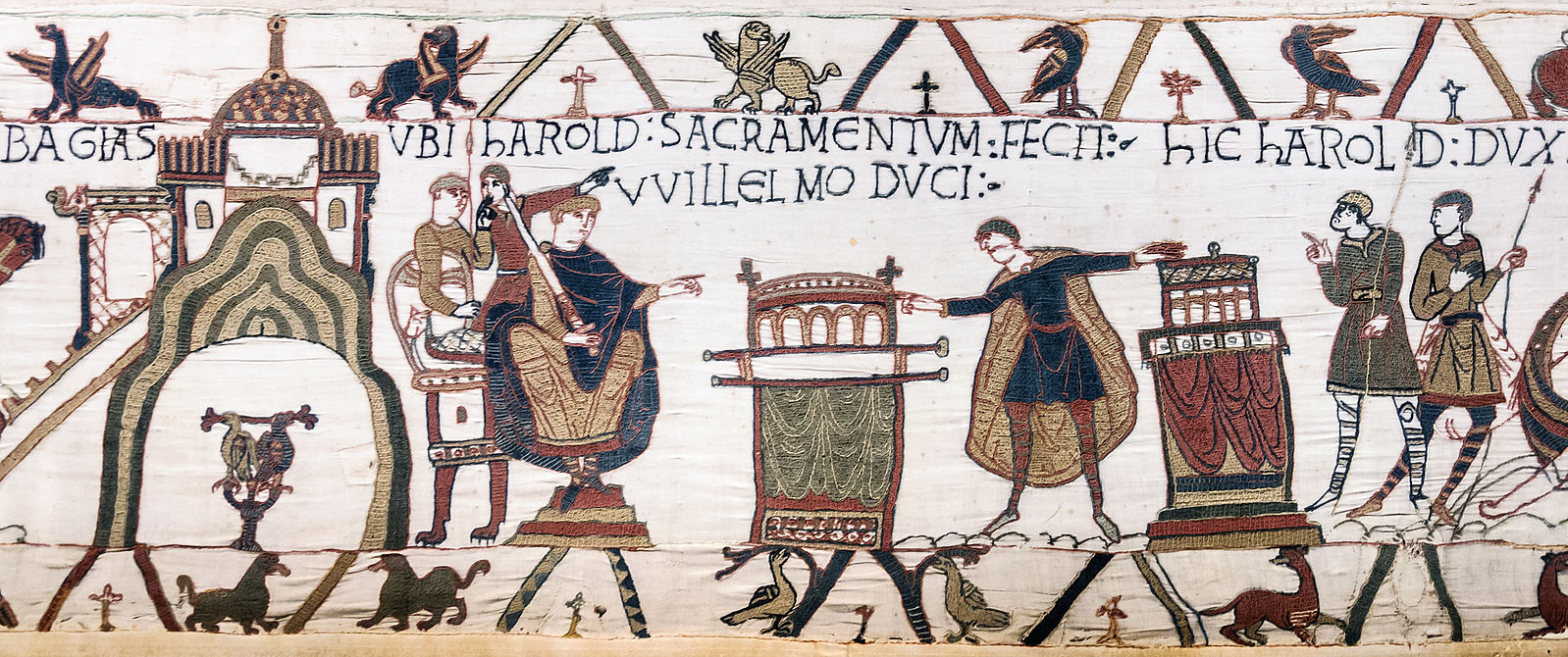
In terms of the general public, the name ‘William the Conqueror’ has never been so popular on the web since the death of Queen Elizabeth. The incoming anniversary has promoted two important projects that are popularizing the Norman experience more than ever. First, the BBC released the first season of the new TV series King and Conqueror: to my knowledge, it is the first time that the Norman Conquest of England will appear on the screen, giving the lay audience the possibility to enjoy a Game of Thrones style depiction of the 1066 events and offering academics the opportunity to point out all the mistakes present in the screenplay. Secondly, an agreement reached by the governments of France and Great Britain will bring the Bayeux Tapestry from Normandy to England for the first time in 1000 years. This incredible 11th-century embroidery narrates the history of the conquest from a Norman perspective, and it stands as one of the most amazing pictorial sources from high medieval Europe: the idea of moving it across the English Channel, as one can imagine, sparked a lot of debate.
Presented in these ways, a project on the history of the Normans sounds like an undeniably good idea. Nevertheless, there are also a few difficulties in dealing with this small field of medieval history, specifically in relation to environmental history. I have briefly mentioned the evidence problem above: almost all written documents until 1200 have been edited and studied, and sources are thus limited. Events like the fortuitous discovery of a forgotten 1066 charter of William the Conqueror in 2023 are surprisingly very rare. A limited corpus of sources is often frustrating, and it encourages scholars to progressively move towards the 13th century, which is richer in terms of written evidence while still partially linked to the history of the Normans. This is true for environmental historians like me, who integrate written evidence with paleoscientific analysis and natural proxy data. For instance, it is often difficult to link the temporal scale of a pollen core (a sample of terrain analyzed by scientists to understand past variation in vegetation) to the historical chronology of the Normans, making the choice for a longer historical period more manageable.
Another issue is the exceptionality of Norman history. Can scholars still promote the idea that the Normans played a more significant role than other groups in the formation of medieval administration, the establishment of the military ‘feudal’ elite, or the modification of 11th-century European landscapes? The example of castle-building can provide some insight into this question. Traditionally, scholars have believed that the Normans imported a wide castle-building policy to England, where previous rulers did not invest in significant forms of fortification. With sites like the recently reopened Norwich Castle, it is easy to understand why the image of the Normans as castle-builders remains popular and appealing. However, archaeology has proven this narrative wrong, highlighting how the Anglo-Normans used sites and models from previous fortresses to establish their centers of power in the English region. As a result, new studies like one led by David Gould are adopting a much broader chronology, analyzing English castles from 800 to 1200. Their approach embodies a methodology that is now becoming typical in the field of medieval studies: interdisciplinarity. Increasingly, scholars are using interdisciplinary methods and building interdisciplinary teams to investigate the central medieval centuries of Norman history. Because of this, this historical period is progressively analyzed in relation to other types of sources that do not exactly match the traditional historical chronologies. That, as a result, requires medievalists to look at events like Norman history in relation to what happened before and after it: they have, in brief, to master larger chronologies instead of the traditional Norman time frame.
This brief piece cannot answer the question in its title: problems and opportunities for Normanists are equally present, which make the near future of this discipline both exciting and challenging. I believe the main contribution of this article is showing that historians should always reflect on the evolution of their field, looking at its broader perspective. Medievalists often say that people in the Middle Ages were not aware of the transformations happening around them. It would be ironic if scholars of this period missed the evolution of their field and lost the opportunity to be, as Peter Brown says, “historians of themselves.”
Image: Myrabella. “Bayeux Tapestry – Scene 23.” (3 March 2013). Public domain.
Luca Barison is a second-year PhD student in the History Department. His research focuses on the environmental, epidemiological, and climatic history of the high Middle Ages, with specific interest in the Norman, Angevin and Swabian kingdoms of England, Sicily and Southern Italy.
 The Footnote
