Why We Should Care About Southeast Asians’ Reactions to the Bombing of Hiroshima and Nagasaki Part 1

Tim Esau Historians have long shirked moral judgements in their studies, favoring epistemological conservatism. Many fear the unavoidable presentism of moral judgements, thereby appealing to moral subjectivism. Thus, historians dread the damage done to “objective history” by bias or personal preference. One does not need to be an academic to recognize the contemporary preference towards epistemological conservatism which arose after the existential debates over objectivism … Continue reading Why We Should Care About Southeast Asians’ Reactions to the Bombing of Hiroshima and Nagasaki Part 1

Hindsight: Reactions from the American Scientific Community on the Deployment of Nuclear Bombs

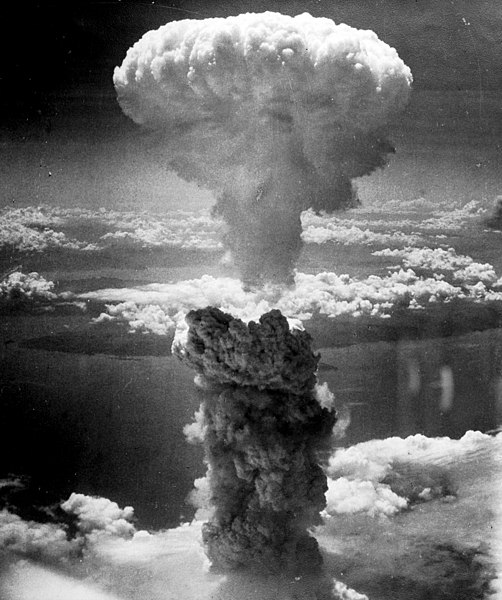
Reed Uhlik For many monumental historical events, the passage of time often leads to a more unified interpretation and narrative of a specific event. However, the decision by the United States to drop two nuclear bombs on Japan does not follow this historical pattern. In the aftermath, US public opinion grew increasingly divided, notably within the scientific community.  Some members of this community initially sought … Continue reading Hindsight: Reactions from the American Scientific Community on the Deployment of Nuclear Bombs

Radiation’s Residual Effects on Identity

Theo Bammi The first time John Smitherman witnessed a nuclear explosion, it was pure spectacle. Recounting the story for Studs Terkel’s The Good War, Smitherman recalls that even from his vantage point miles away, the “ball of fire” tearing Bikini Atoll apart on July 1, 1946 was indescribable (Terkel 547). The second explosion, however, was less satisfying. Instead of warmth, Smitherman was pelted with a … Continue reading Radiation’s Residual Effects on Identity