
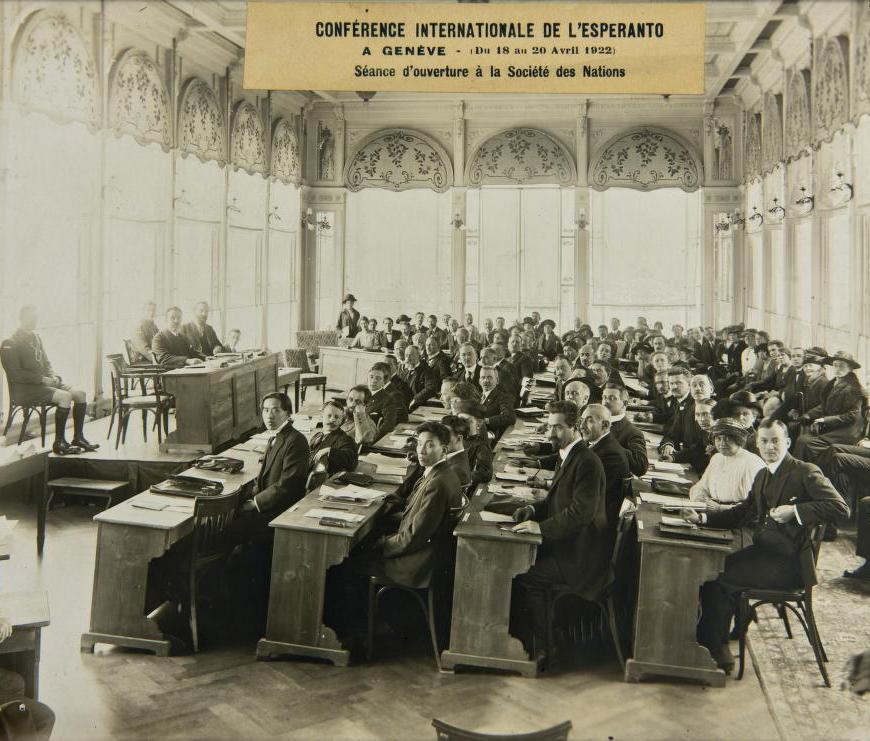
Esperanto, Nationalism, and Bureaucracy in the League of Nations: A Language Caught in the Crossfire
Aidan Pritchard From its humble beginnings as an unnamed language in 1887, to the forefront of the League of Nations’ debate on auxiliary languages, Esperanto – meaning ‘one who hopes’ – has aimed to promote global peace and cooperation. The artificial language’s inventor, Ludwik Zamenhof, had grown up in Bialystok, Poland, a city populated by Poles, Russians, Germans, and Jews. The city’s linguistic barriers exacerbated … Continue reading Esperanto, Nationalism, and Bureaucracy in the League of Nations: A Language Caught in the Crossfire


 The Footnote