Many Ways to be Deaf: Situating Deafness in Pre-Modern Chinese History

Oscar Zhenhao Yu Disability has been a burgeoning topic for historians in different fields. Considering disability in Chinese history, few works focus on disability, not to mention exploring the ontology of disability in its pre-modern context. This essay therefore situates disability, and deafness in particular, within pre-modern Chinese history (1644-1912). How did the Chinese perceive deafness before the twentieth century? What sources would be useful … Continue reading Many Ways to be Deaf: Situating Deafness in Pre-Modern Chinese History

Assassin’s Creed: History Porn or Digital Heritage?

Rae Neville This Thursday, the popular video game studio Ubisoft will release the latest installment in the Assassin’s Creed franchise: Assassin’s Creed Mirage. Set in Baghdad in the year 861, the game will feature a world rich with art, culture, and knowledge. Players will follow the story of Basim, a “cunning street thief with nightmarish visions seeking answers and justice,” as they explore and cut … Continue reading Assassin’s Creed: History Porn or Digital Heritage?

Western Medicine’s Internuncio to Japan

Alexander von Kumberg In 1972 sculptor Tadao Koga unveiled his monument to the introduction of Western medicine to Japan in Ōita, a city on the northeastern coastline of Kyushu, Japan. The bronze statue depicts a Japanese patient preparing for his surgery, flanked by a surgeon and his assistant. The surgeon, dressed in Nanban clothes, is Luis de Almeida. But who is this giant of old, … Continue reading Western Medicine’s Internuncio to Japan

Tell Us About Your Summer! Interviews with PhD and MAGIC Students about their Summer Research Experiences

Over the past few weeks, Rosie Click and Sareena Dubey interviewed Georgetown History graduate students about their summer experiences. The first interview about summer teaching experiences was published on September 5th, and the second interview about summer language programs was published last week. This interview features Georgetown History PhD student J. Alexander Killion and MAGIC students Jason Roeder and Tanushree Bhatia, who talked to us … Continue reading Tell Us About Your Summer! Interviews with PhD and MAGIC Students about their Summer Research Experiences

Tell Us About Your Summer! Interviews with PhD and MAGIC Students about their Summer Language Programs

Over the past few weeks, Rosie Click and Sareena Dubey interviewed Georgetown History graduate students about their summer experiences. The first interview about summer teaching experiences was published last week. The next two Footnote posts will feature more interviews about summer experiences in language learning and research. This interview features Georgetown History PhD students Ethan Weisbaum and Ethan Barkalow, and MAGIC student Oscar Yu, who talked … Continue reading Tell Us About Your Summer! Interviews with PhD and MAGIC Students about their Summer Language Programs

Tell Us About Your Summer! Interviews with PhD and MAGIC Students about their Summer Teaching Experiences

Over the past few weeks, Rosie Click and Sareena Dubey interviewed three students about their summer experiences. The next three Footnote posts will feature those interviews; the first about teaching, the second about language learning, and the third about research. This interview features Georgetown History PhD students João Gabriel Rabello Sodré and Erica Lally, and MAGIC student Mallory Page, who talked to us about teaching … Continue reading Tell Us About Your Summer! Interviews with PhD and MAGIC Students about their Summer Teaching Experiences

The Push to “Improve” Slavery in the British Caribbean

Eamonn Bellin The abolition of the British slave trade in 1807 transformed colonial slavery into a burning issue in British politics. If the slave trade was unjust, how could slavery be sustained? Some thought the enslaved should be emancipated and resettled throughout the Caribbean. However, most leaders of the anti-slave trade campaign balked at immediate emancipation. “It would be…the grossest violation and the merest mockery … Continue reading The Push to “Improve” Slavery in the British Caribbean

Interview with Sarah-Louise Miller on Writing about Women in Wartime and Intelligence

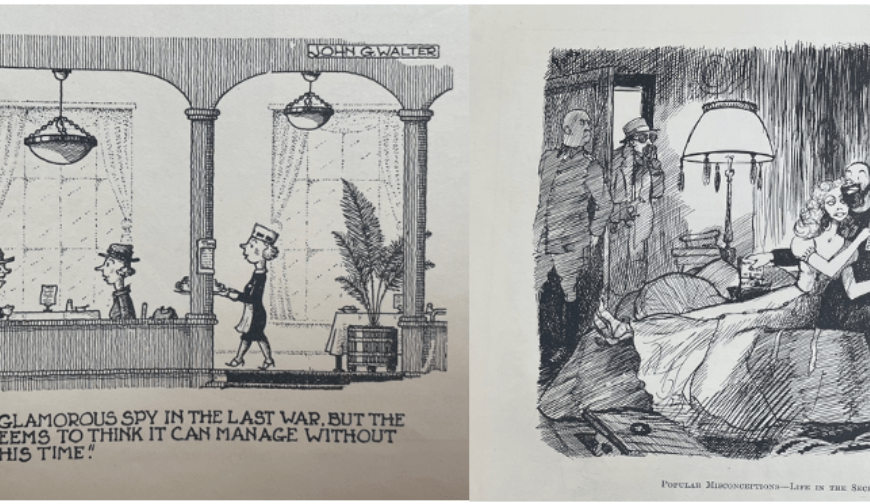
This week, The Footnote interviewed Dr. Sarah-Louise Miller, an experienced historian, author and media consultant, specializing in Second World War history. She is currently based at the Faculty of History, University of Oxford, and is a tutor at the Defence Studies Department, King’s College London. She has recently published The Women Behind the Few; The Women’s Auxiliary Air Force and British Intelligence During the Second … Continue reading Interview with Sarah-Louise Miller on Writing about Women in Wartime and Intelligence

The Effect of Australian New Wave Cinema on the “Anzac Legend” of WWI

Josh Downes April 25 is Anzac Day in Australia and New Zealand. This national day is a commemoration in both countries of all those who have served and died in military operations. More specifically, this year marks the 108th anniversary of Australian and New Zealand troops landing on the shores of Gallipoli (in what is now Türkiye) during the First World War. The sacrifice of … Continue reading The Effect of Australian New Wave Cinema on the “Anzac Legend” of WWI

Interview with Dr. John Lisle on his new book, The Dirty Tricks Department

This week, The Footnote interviewed Dr. John Lisle, a historian of Science and the American Intelligence Community from Azle, Texas. He earned a PhD in history from the University of Texas, where he teaches classes on the history of science. His first book, The Dirty Tricks Department: Stanley Lovell, the OSS and the Masterminds of World War II Secret Warfare, sheds light on the scientists … Continue reading Interview with Dr. John Lisle on his new book, The Dirty Tricks Department