By Catherine La Prairie
Tell me a little bit about yourselves! What are your academic backgrounds and research interests?
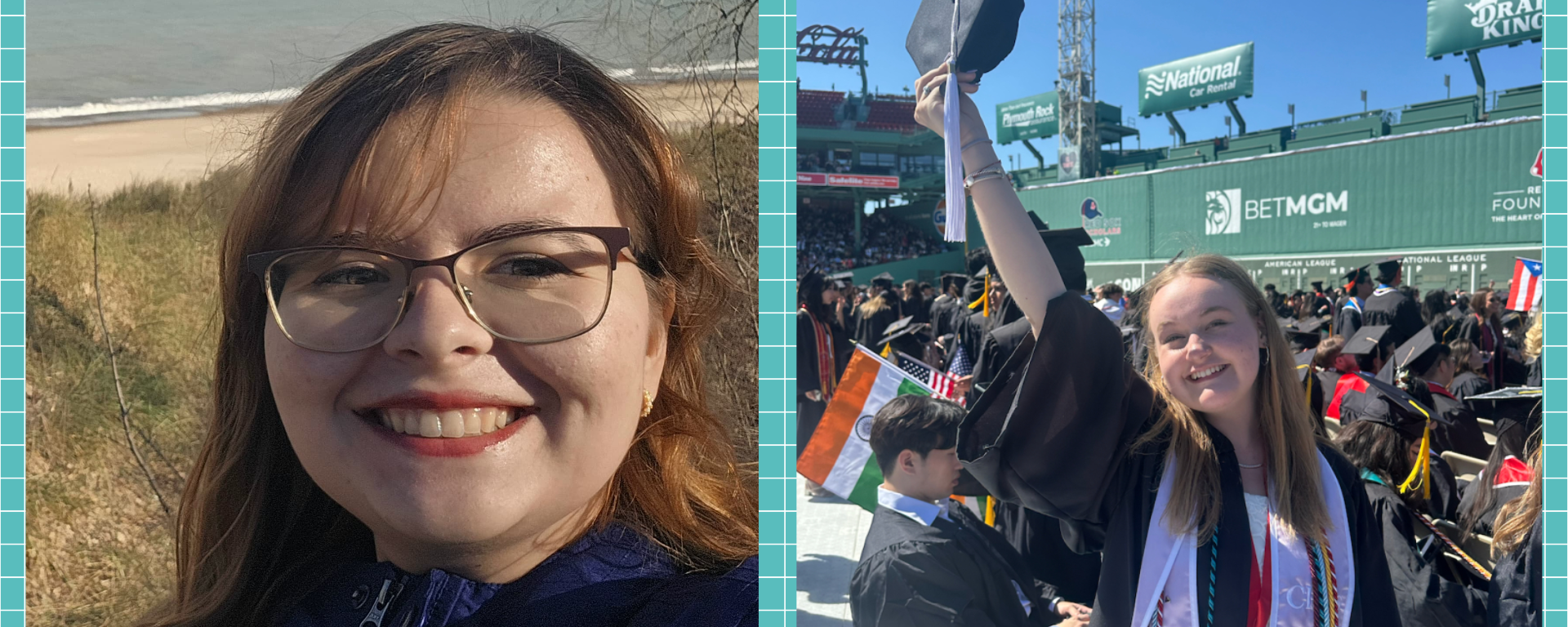
Victoria: I’m a second-year PhD student studying Russian Soviet history. I focus on how Russian and Soviet art was removed from the region after the 1917 Revolution, and specifically how these works made their way into Western institutions in the US and in Europe. I’m interested in how these institutions have displayed and categorised these works, particularly in relation to questions of nationality. I’m also really drawn to public history, which has been shaped in part by my work as an intern with the National Park Service. More recently, that experience has sparked an interest in American history, which is a bit of a departure from my usual field of study!
Madi: I’m a second-year MA student in history. Before Georgetown, I went to Northeastern University, where I majored in history with minors in German and cultural anthropology. My graduate research focuses on the post-World War II U.S. occupation of Austria, specifically how the American presence influenced the rise of the modern far right and memory politics surrounding the conflict. I first became interested in this topic while studying abroad in Salzburg as an undergraduate, and I was there in the lead-up to the 2024 European Parliament elections and the Austrian national election. Seeing the campaigning firsthand made me curious about the history of these political parties and how they came to occupy such a prominent place in Austrian politics.
How did you come to be involved in The Footnote?
Victoria: In undergrad, I worked as one of the managing editors of our history journal, and I wanted to continue being involved in editorial work. I have an editing certificate from the University of California, Santa Barbara, and even my internship with the National Park Service involves a lot of writing and editing, so when the opportunity came up to join The Footnote, I was excited to continue doing that kind of work within the Georgetown History Department. When I first started working for The Footnote last year, I also developed some ideas about how we might do things differently, and I was interested in taking on more of a leadership role within the organization.
Madi: I started with The Footnote as an editorial assistant in my first semester at Georgetown. I’d been involved in an undergraduate history review, and I was looking to do something similar here in graduate school. I had such a positive experience that, when the opportunity to become co-editor-in-chief with Victoria came up, I jumped at the chance to become more involved in the organization and to begin shaping it and expanding its reach.
How would you describe The Footnote for people who haven’t encountered it before?
Madi: I typically describe it as a history blog run by and for graduate students in our department. It’s a space for us to write about our niche historical interests that might fall outside our regular research. So, for example, one of the articles I wrote last year was about the wreck of the Edmund Fitzgerald, which is a big part of Midwestern cultural identity. Being someone from the Midwest myself, I was happy to have the opportunity to write an article about a topic that I probably wouldn’t have explored otherwise.
Victoria: It’s really a forum for graduate students to share their interests and engage with one another in a lower-stakes environment than we might otherwise encounter in our academic work, while having the chance to get published.
Madi: We also organize social events for the history department, giving everyone a way to step away from their research or out of the library and spend time together. I think that aspect of The Footnote is really important in fostering a positive and collegial environment.
Can you walk us through the editing process? What happens after someone submits a piece, and what do you think makes for a strong submission?
Victoria: We start by reviewing submissions as a team to make sure they fit our guidelines and the kinds of topics that we publish. From there, it’s assigned to two editors who go through it carefully for spelling and grammar, as well as the overall argument. We try to preserve the author’s own voice and argument as much as possible.
Madi: After our editors are finished recommending changes, the submission is returned to the author, who can choose which changes to accept or reject, and then we publish the final article on our website.
Victoria: We’ve received a lot of strong pieces, but I think the best ones are those that concern an author’s genuine interest or passion. I particularly like the ones that explore interesting archival finds, though I might be a little bit biased because that was what my article was about!
What’s been the most rewarding or surprising part of working for The Footnote thus far?
Victoria: I think the community that The Footnote has fostered within the department has been really impressive. We have a wonderful team of editors, and it provides us with a space to work with one another and engage with people in completely different fields from our own.
Madi: One of the most rewarding parts for me has been getting to read so many articles on topics outside my field that my peers are really passionate about. It’s also changed the way I approach writing and editing. I find myself thinking more about how to make my own work more accessible and readable for a non-specialized audience.
What are your hopes for The Footnote for the rest of the year?
Victoria: Publishing more, especially from contributors outside of the Georgetown History Department. Beyond that, I hope we can continue sharing interesting stories that graduate students are passionate about.
Madi: I’d love to see submissions that are still historical in nature but from students in other disciplines. I think it would be interesting to see how they approach the topics they’re studying through a historical lens. Those perspectives would be a great addition to what we’re already publishing.
Outside of your work for The Footnote, is there anything you’re currently reading, researching, or thinking about that you’d like to recommend?
Victoria: I’ve been listening to a lot of music lately, since I don’t have much time to read right now. I’ve been into Hayley Williams’ album Ego Death at a Bachelorette Party, which has been accompanying me through some frantic writing for my Omnibus paper. I’ve also really enjoyed Ashe’s last album, Girl of My Dreams.
Madi: At the top of my reading list for when finals are over is Killers of the Flower Moon. I started it over the summer, but things got so busy during the semester that it’s been sitting on my bookshelf, waiting for me to find the time to finish it. During the school year, though, I have to admit I watch a lot of reality TV. I’m currently keeping up with Dancing with the Stars and Survivor. I love having something relatively mindless that I can just put on while I’m doing work. Unfortunately, both seasons have been very entertaining, so it’s been a little harder to concentrate! Still, it’s a nice break in my week, especially when I get to watch with my roommates.
Catherine La Prairie is a PhD student in Transregional History and Outreach Coordinator for The Footnote. Her research examines the cultural and intellectual histories of French and American imperialism in the Atlantic world.

